
Adenovirus in children is a common viral infection that can cause symptoms such as fever, cough, sore throat, or red eyes (conjunctivitis). The infection can occur throughout the year and may spread easily when children participate in group activities such as school, summer classes, recreational activities, or swimming.
Most children with adenovirus infection recover well with appropriate care and monitoring. However, some cases can become severe, particularly in young children or children with underlying medical conditions.
How Does Adenovirus Spread?
Adenovirus can spread through:
- Respiratory droplets when an infected person coughs or sneezes.
- Direct contact with an infected person.
- Touching surfaces or objects contaminated with the virus.
- Sharing towels, drinking cups, or personal items.
- Some types of adenovirus can cause conjunctivitis and may be associated with inadequately disinfected water.
During the summer, children often participate in group activities such as summer school, summer camps, recreational facilities, and swimming pools. Close contact with many people can increase the risk of infection.
The risk of transmission does not come only from swimming pool water. Close contact with others and sharing personal items can also contribute to the spread of the virus.
Symptoms of Adenovirus in Children
Adenovirus infection does not have completely specific symptoms and can sometimes be confused with influenza or other viral infections.
Children may develop:
- Fever, sometimes high and lasting for several days.
- Cough and runny nose.
- Sore throat or pharyngitis.
- Red eyes or conjunctivitis.
- Vomiting or diarrhea.
Symptoms alone cannot confirm that a child has adenovirus infection. In some cases, a doctor may recommend testing when necessary.
More important than identifying the exact virus is monitoring the child’s overall condition and recognizing signs of severe illness as early as possible.
Is Adenovirus Dangerous?
Most otherwise healthy children recover completely. However, in some cases, adenovirus infection can become severe and cause complications such as:
- Pneumonia or respiratory failure.
- Dehydration.
- Severe conjunctivitis.
- Hepatitis.
- Encephalitis.
- Myocarditis.
- Cystitis.
After severe adenovirus pneumonia, some children may experience long-term respiratory problems.
Children who may be at higher risk of severe illness include:
- Young children, especially those under 2 years of age.
- Premature infants.
- Children with congenital heart disease or chronic lung disease.
- Children with weakened immune systems.
- Children receiving cancer treatment or taking immunosuppressive medications.
However, early recognition, close monitoring, and appropriate treatment can help most children recover well.
Caring for a Child with Adenovirus at Home
Most children with adenovirus infection can be cared for and monitored at home if they remain alert, can drink adequately, are breathing comfortably, and have no signs of severe illness.
Parents should:
- Allow the child to rest, get enough sleep, and avoid strenuous activities.
- Encourage adequate fluid intake. For infants and young children, continue breastfeeding or provide appropriate milk or formula.
- Offer soft, easy-to-digest foods and provide smaller, more frequent meals if the child has a poor appetite.
- Monitor the child’s temperature and overall condition.
- If the child has a fever and is uncomfortable, an appropriate fever-reducing medicine may be used according to the child’s weight and the medication instructions or as directed by a doctor.
- Do not give antibiotics or combine multiple medications without appropriate medical advice.
- If the child has vomiting or diarrhea, pay attention to fluid intake and urination to detect dehydration early.
- If the child has red eyes or conjunctivitis, maintain good eye hygiene and monitor the child’s condition.
Important Notes About Fever
Fever is a common symptom of viral infections in children. The goal of fever treatment is to help the child feel more comfortable. It is not necessary to bring the temperature down to normal at all costs.
Parents should monitor the child’s overall condition, ability to drink and eat, and urination rather than focusing only on the number shown on the thermometer.
When fever-reducing medicine is needed, choose an appropriate medication, use the correct weight-based dose, and follow the recommended interval between doses. Do not increase the dose or give the medicine too frequently simply because the temperature has not decreased as much as expected.
If you are unsure which fever-reducing medicine your child should take, how much to give, or when the next dose can be given, you can refer to FeverCare – a tool to help parents calculate fever-reducing medication doses for children.
During home care, parents should monitor the child’s temperature, ability to eat and drink, urination, level of alertness, and breathing rate.
If the child’s condition worsens or warning signs appear, seek medical attention immediately.
When Should You Take Your Child to See a Doctor Immediately?
Parents should take their child to a healthcare facility immediately if any of the following signs occur:
- Difficulty breathing, rapid breathing, or chest retractions.
- Unusual drowsiness, difficulty waking the child, or seizures.
- Refusing to breastfeed, refusing food, or drinking very little.
- Reduced urination, dry lips, sunken eyes, or other signs of dehydration.
- Persistent fever without improvement in the child’s overall condition.
- Increasing tiredness or worsening general condition.
Extra caution is needed when the child is very young, was born prematurely, or has an underlying medical condition.
Recognizing signs of severe illness early is much more important than trying to determine exactly which virus is causing the infection.
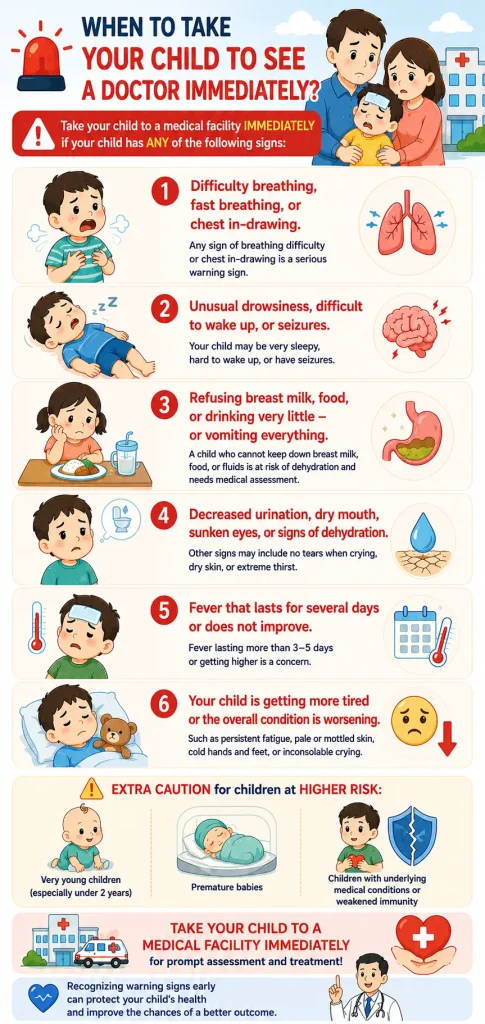
Warning Signs That Require Immediate Medical Attention
Common Mistakes Parents Should Avoid
Giving Antibiotics Without Medical Advice
Adenovirus is caused by a virus, so antibiotics do not treat the viral infection. Antibiotics should only be used when a doctor determines that there is a bacterial infection or an appropriate bacterial co-infection.
Using antibiotics unnecessarily does not help the child recover faster and may increase the risk of antibiotic resistance.
Assuming It Is Just a Common Cold
Adenovirus infection can look similar to many other viral illnesses. If a child has persistent fever, significant fatigue, poor fluid intake, or unusual symptoms, parents should not continue monitoring the child at home for too long without seeking medical advice.
Returning to Group Activities Too Soon
When a child has just recovered from a fever but still has symptoms of illness, returning to school, summer classes, or group activities too early may increase the risk of spreading the infection to others.
Focusing Only on Identifying the Exact Virus
Viral testing can be useful in certain situations, but the child’s actual clinical condition is the most important factor.
Parents should pay attention to the child’s breathing, eating and drinking, level of alertness, and signs of dehydration.
How Can Adenovirus Infection Be Prevented?
There is currently no adenovirus vaccine routinely used for children in the general community, and there is no specific antiviral treatment for most adenovirus infections. Therefore, preventing transmission remains important.
Parents should:
- Teach children to wash their hands frequently with soap and water.
- Cover the mouth and nose when coughing or sneezing.
- Avoid sharing towels, drinking cups, and personal items.
- Regularly clean frequently touched surfaces and objects.
- When a child has a fever or symptoms such as cough, red eyes, or diarrhea, keep the child home from school, avoid swimming, and limit contact with crowded places.
- Allow the child to return to group activities only when their health has recovered appropriately.
- Choose swimming pools that are well managed, maintain appropriate water quality, and follow proper disinfection standards.
- Do not allow children who are currently ill to swim or participate in group activities.
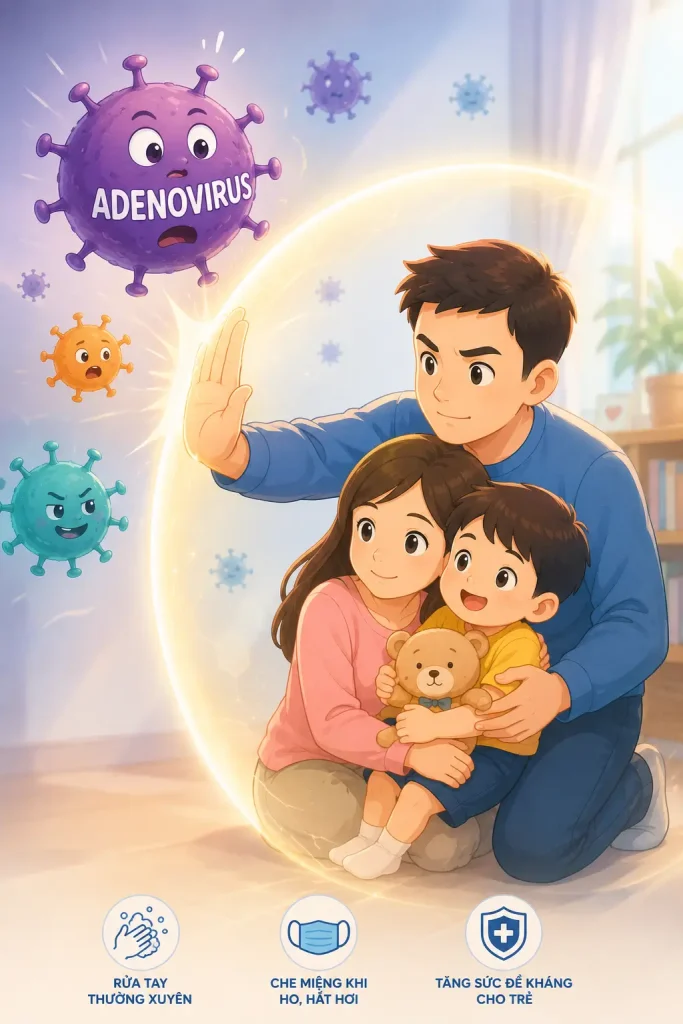
What Should Parents Remember About Adenovirus?
Adenovirus is not a new virus, and most children who become infected recover completely.
Parents do not need to panic, but they should not become complacent either. The most important steps are to care for the child appropriately, monitor the illness closely, and recognize warning signs early.
If your child has difficulty breathing, is unusually drowsy, has seizures, is drinking poorly, shows signs of dehydration, or has a worsening condition, seek medical attention immediately.
Staying calm, monitoring your child closely, and seeking medical care at the right time are the best ways to protect your child.
A Useful Tool for Parents
If your child has a fever and you are unsure about the appropriate weight-based dose of fever-reducing medicine or the interval between doses, you can refer to:
FeverCare – A Tool to Help Parents Calculate Fever-Reducing Medication Doses for Children
FeverCare helps parents reference the appropriate use of fever-reducing medicines based on information about their child. Results depend on the information entered and do not replace an in-person medical examination or advice from a healthcare professional.