
Preterm infants, defined as babies born before 37 weeks of gestation, have a higher risk of iron deficiency than full-term infants because they have lower iron stores at birth. Therefore, iron supplementation for preterm infants should be started early and appropriately monitored.
According to the latest recommendations from the American Academy of Pediatrics (AAP) in 2026, preterm infants who are tolerating full enteral feeds should begin receiving iron supplementation or iron fortification at around 2 weeks of age.
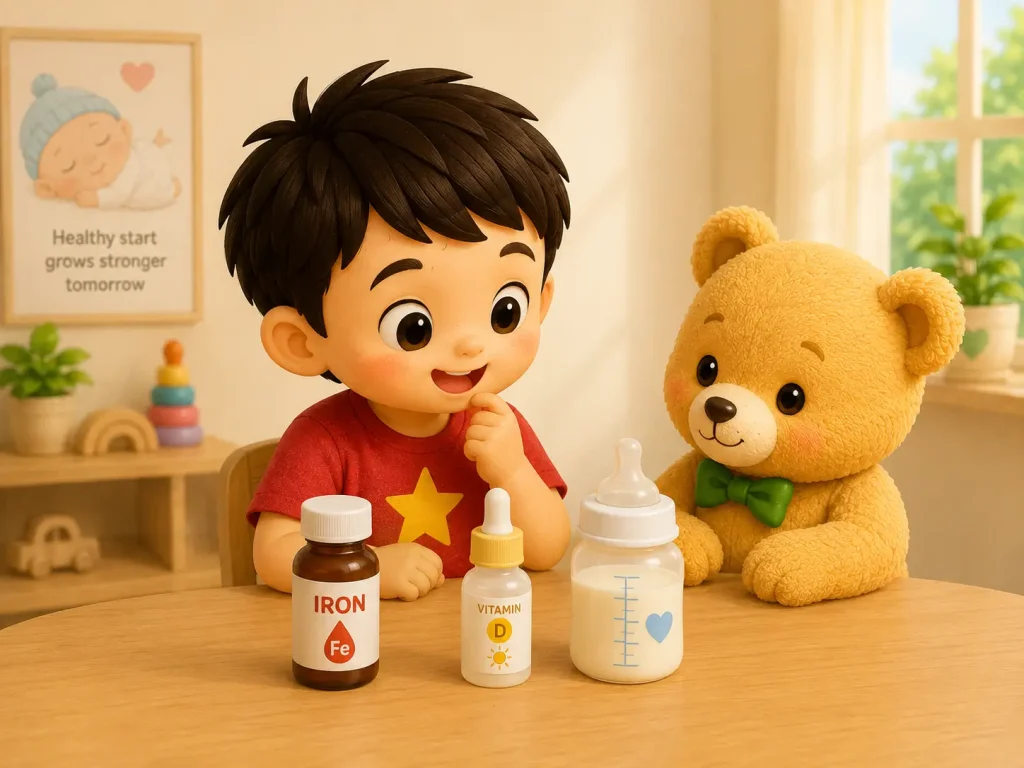
How Much Iron Do Preterm Infants Need?
The AAP recommends ensuring a total iron intake of approximately 2–3 mg/kg/day of elemental iron.
This iron does not necessarily have to come entirely from supplements. Infants may receive iron from iron-fortified preterm infant formula or other iron-fortified nutrition, combined with iron supplements when necessary.
Therefore, 2–3 mg/kg/day of elemental iron refers to the total amount of iron the infant should receive, not automatically the dose of an iron supplement that parents should give. The type and amount of milk, as well as other sources of iron, should be considered when determining whether additional supplementation is needed.
Preterm Infants Need Iron Earlier Than Full-Term Infants
The timing of iron supplementation differs significantly between preterm and full-term infants.
For exclusively breastfed full-term infants, the AAP recommends 1 mg/kg/day of elemental iron starting at around 4 months of age.
In contrast, preterm infants who are tolerating full enteral feeds should begin receiving iron supplementation or iron fortification at around 2 weeks of age, with a total elemental iron intake of 2–3 mg/kg/day.
Therefore, preterm infants need attention to their iron needs much earlier and at a higher weight-based intake than exclusively breastfed full-term infants.
Do Not Give Cow’s Milk to Preterm Infants Before 12 Months
Preterm infants should not be given cow’s milk or plant-based beverages as a replacement for breast milk or infant formula before 12 months of age.
During the first year of life, infants need appropriate nutrition to meet their requirements for energy, protein, iron, and other essential nutrients needed for healthy growth and development.
Monitoring Growth and Development in Preterm Infants
Adequate iron intake is only one part of caring for a preterm infant. Parents should also monitor weight, length/height, and head circumference to assess whether the child is growing appropriately.
Parents can use Growth Tracking from Bác sĩ bên con to monitor their child’s growth using WHO growth standards.
In addition to physical growth, preterm infants should also be monitored for developmental milestones, including motor skills, language, cognition, and social interaction. Parents can use Developmental Milestone Tracking to follow their child’s developmental skills by age.
Conclusion
According to the AAP 2026 recommendations, preterm infants born before 37 weeks of gestation who are tolerating full enteral feeds should begin receiving iron supplementation or iron fortification at around 2 weeks of age, with a target total intake of 2–3 mg/kg/day of elemental iron.
Parents should not give iron supplements based solely on the child’s weight. The total amount of iron received from milk and other sources should also be considered. At the same time, monitoring growth and development provides a more comprehensive assessment of a preterm infant’s progress.