
Deworming for children is a common concern for parents, especially for children who frequently play outdoors, have a habit of putting their hands in their mouths, or live in environments where intestinal worms are more common.
According to the World Health Organization (WHO), regular deworming is one of the measures used to control soil-transmitted helminth infections in children living in at-risk areas. The medicines most commonly used are albendazole and mebendazole, which are generally well tolerated when used at the recommended dose.
So, when can children be dewormed, which medicines are used, and how often should they be given?
At what age can children be dewormed?
WHO recommends preventive deworming for children 12 months of age and older in areas where soil-transmitted helminth infections are a public health concern.
For children under 2 years of age, the recommended dose of albendazole is reduced compared with the dose used in children aged 2 years and older.
Deworming medicine doses for children
| Medicine | Children 12–23 months | Children ≥24 months |
|---|---|---|
| Albendazole | 200 mg, single dose | 400 mg, single dose |
| Mebendazole | 500 mg, single dose | 500 mg, single dose |
These doses are recommended for preventive treatment of soil-transmitted helminth infections according to WHO guidance.
Parents should keep in mind that preventive deworming is not the same as treating every type of intestinal parasite. If a child has been diagnosed with a specific worm infection, such as pinworm infection, the treatment regimen may be different.
How to give the medicine: Both medicines are taken by mouth as a single dose. For young children who cannot safely chew or swallow the tablet, the medicine can be crushed and mixed with a small amount of water or soft food before giving it to the child.
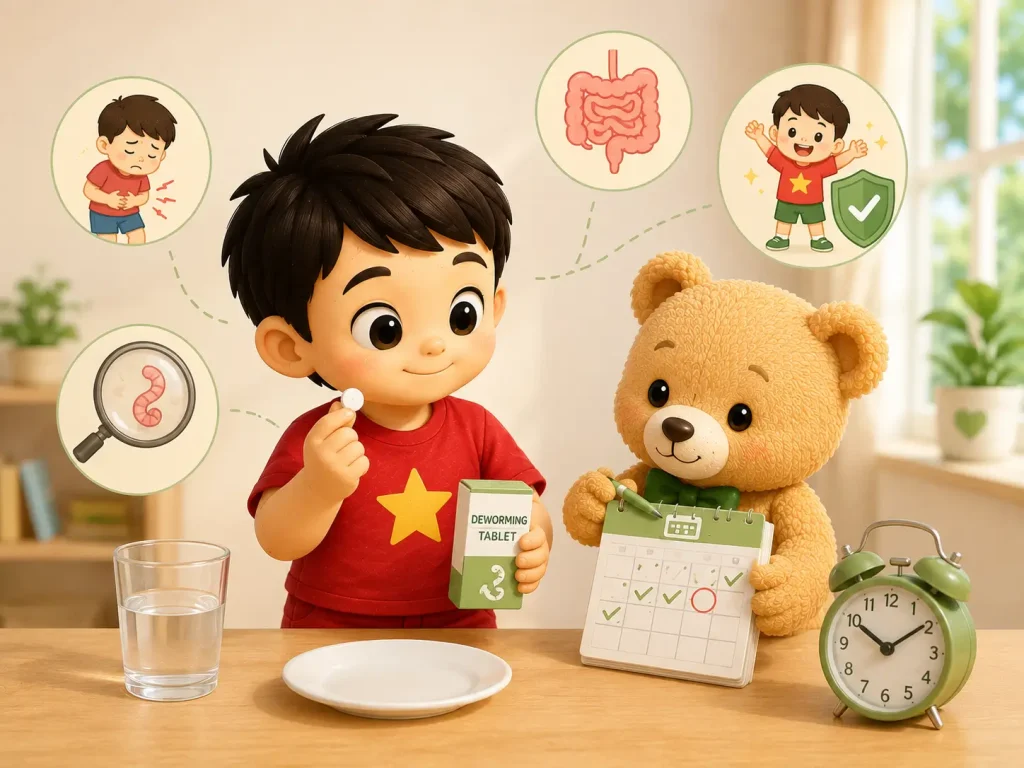
How often should children be dewormed?
Children do not necessarily need to be dewormed exactly every 6 months.
According to WHO, children living in areas where soil-transmitted helminth infections are common may receive preventive deworming once or twice a year, depending on the level of transmission in the local area. In areas with a higher burden of infection, deworming may be carried out twice a year.
These recommendations are designed for public health programs, so parents do not need to calculate the prevalence of worm infections in their own community. The appropriate schedule can be based on local health recommendations or discussed with a healthcare professional.
What are the benefits of deworming?
Soil-transmitted helminths include roundworm, whipworm, and hookworm. When children have a heavy or prolonged infection, these worms can affect their health and nutritional status.
Worm infections can cause intestinal inflammation and damage, which may interfere with nutrient absorption. Hookworm infection can also cause chronic blood loss and contribute to iron-deficiency anemia. In severe cases, a large number of roundworms can cause intestinal obstruction.
Therefore, the main goal of deworming is to reduce the number of worms in the body and limit the effects of worm infections on a child’s health and nutritional status.
Can deworming help children gain weight and height?
Some studies have found greater benefits among children who are actually infected with intestinal worms.
In a review of studies considered by WHO, children who were confirmed to have worm infections and received deworming treatment gained an average of approximately 0.75 kg more in body weight than untreated children. The average difference in height was approximately 0.25 cm.
However, this does not mean that every child will gain 0.75 kg or 0.25 cm after taking a deworming medicine.
These findings were mainly observed among children who were infected with worms, and the effects are not the same for every child. Among children without confirmed infection or in community-wide deworming programs, studies have not shown a clear and consistent benefit in body weight or other nutritional measures.
Therefore, if a child is not gaining weight well or is shorter than expected for their age, parents should not assume that worm infection is the cause. The child’s diet, health conditions, and growth pattern should be assessed more broadly.
Are deworming medicines safe?
Albendazole and mebendazole have been widely used in programs to control intestinal worm infections around the world. WHO considers these medicines effective, affordable, and generally safe, with most adverse effects being mild.
Some children may experience:
- Abdominal pain or discomfort.
- Nausea.
- Headache.
- Mild digestive symptoms.
When these symptoms occur, they are usually short-lived.
Parents should not increase the dose or give repeated doses within a short period simply because they believe that “more deworming is better.”
Can children get worms again after deworming?
Yes.
Deworming medicines help eliminate or reduce the number of worms present at the time of treatment, but they do not provide long-term immunity. Children can become infected again if they are exposed to sources of infection.
Preventing reinfection is therefore just as important as taking the medicine.
Parents should encourage children to:
- Wash their hands with soap before eating and after using the toilet.
- Avoid putting dirty hands or objects into their mouths.
- Wear shoes, especially when playing on or walking on soil.
- Eat properly cooked food and drink safe water.
- Wash fruits and vegetables thoroughly before eating.
- Use hygienic toilets.
- Keep the home and surrounding environment clean.
WHO also emphasizes that controlling soil-transmitted helminth infections requires a combination of deworming, good personal hygiene, and improved sanitation.
When should a child see a doctor?
Not every episode of abdominal pain, poor appetite, or slow weight gain is caused by intestinal worms.
Parents should seek medical advice if a child has:
- Persistent or recurrent abdominal pain.
- Prolonged diarrhea.
- Poor weight gain or malnutrition.
- Unexplained anemia.
- Anal itching, especially at night.
- Visible worms in the stool.
- Persistent symptoms despite deworming.
If pinworm infection is suspected, the treatment approach may be different from routine preventive deworming. Some cases require repeat treatment after a certain interval, and attention may also need to be given to household members to reduce the risk of reinfection.
What should parents remember about deworming?
Regular deworming plays an important role in controlling soil-transmitted helminth infections in areas where these infections are common.
According to WHO:
- Children 12 months of age and older may be included in preventive deworming programs.
- Albendazole: 200 mg for children aged 12–23 months; 400 mg for children aged 24 months and older.
- Mebendazole: 500 mg for children aged 12 months and older.
- The medicine is given as a single dose for preventive deworming.
- Deworming may be recommended once or twice a year, depending on the local level of infection.
Deworming can reduce the burden of intestinal worm infections, but it does not replace a balanced diet, good personal hygiene, and proper sanitation.
If a child has symptoms suggesting a worm infection—particularly persistent abdominal pain, anemia, poor growth, or visible worms in the stool—parents should have the child evaluated by a healthcare professional rather than repeatedly giving deworming medicine without an assessment.
References
- World Health Organization (WHO). Deworming in children.
- World Health Organization (WHO). Soil-transmitted helminth infections.
- World Health Organization (WHO). Preventive chemotherapy to control soil-transmitted helminth infections in at-risk population groups.