
Iron is essential for blood production and healthy growth and development in children. Iron deficiency in children can occur before anemia develops, so there may be no obvious signs at first.
Preventing iron deficiency, detecting it early, and using iron supplements correctly can help reduce the risk of iron deficiency anemia and the potential effects of prolonged iron deficiency.
Which Children Are at Higher Risk of Iron Deficiency?
Some children are more likely to develop iron deficiency, particularly:
- Preterm infants, who have lower iron stores at birth.
- Exclusively breastfed infants who have not started iron supplementation at the appropriate time.
- Children starting solid foods who eat few iron-rich foods or have a limited diet.
- Children who drink large amounts of cow’s milk after 12 months of age and eat fewer iron-rich foods.
- Adolescents who menstruate, particularly those with heavy menstrual bleeding.
- Children with conditions that cause blood loss or impaired iron absorption.
Recognizing these risk factors can help families take preventive measures rather than waiting until signs of anemia appear.
Signs of Iron Deficiency in Children
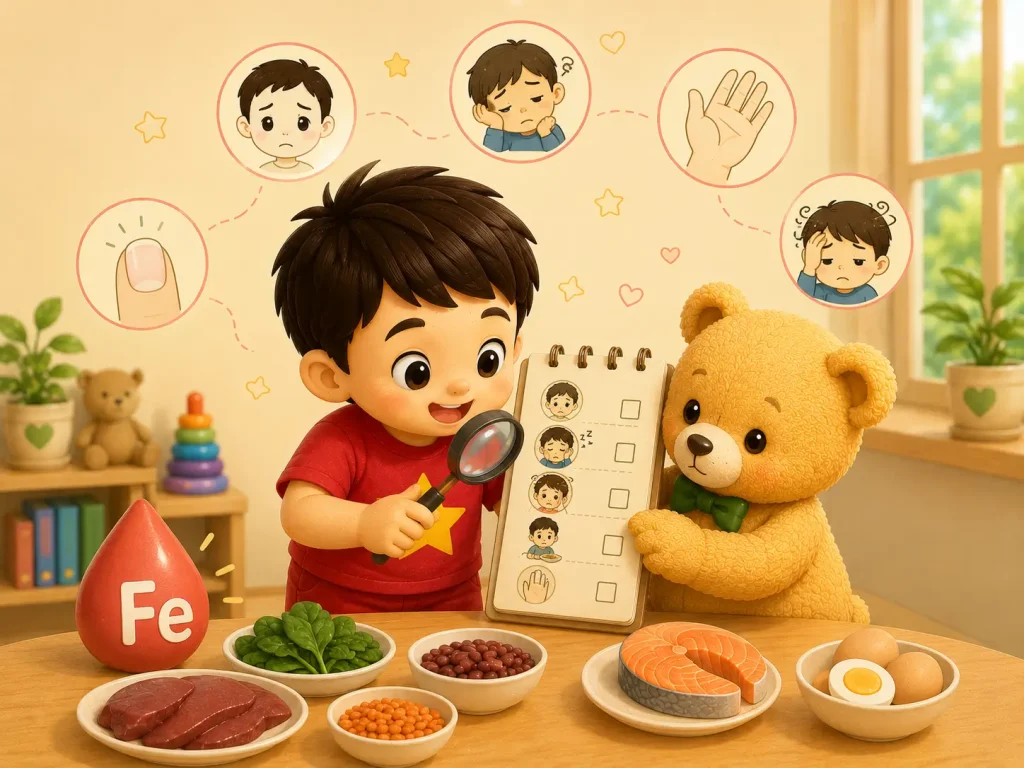
Mild iron deficiency may cause no obvious symptoms. When iron deficiency persists and leads to anemia, children may develop:
- Pale skin or mucous membranes.
- Tiredness or low energy.
- Difficulty concentrating.
- Older children may have reduced school performance or physical activity.
- Pica – craving and eating non-food substances such as ice, soil, paper, or cardboard.
However, these signs are not specific to iron deficiency. A child cannot be diagnosed with iron deficiency based only on pale skin, tiredness, or poor appetite.
When Should Children Be Screened for Iron Deficiency?
Not every child needs regular testing for iron deficiency. Doctors consider the child’s age, diet, and risk factors when deciding whether screening is needed.
According to the 2026 American Academy of Pediatrics (AAP) recommendations, some important screening periods include:
- 9–12 months: screening for children whose primary source of nutrition is breast milk.
- 15–18 months: attention to children who received infant formula during their first year, particularly during the transition to solid foods and cow’s milk.
- Around age 14 or within 1 year after the first menstrual period: screening for adolescent girls.
Children with risk factors or concerning symptoms may need to be evaluated earlier.
What Tests Are Used to Assess Iron Deficiency?
Doctors may order a complete blood count (CBC) and serum ferritin to evaluate anemia and iron stores.
Ferritin is an important test, but there is an important limitation: ferritin can increase when a child has inflammation or an infection. Therefore, the results should be interpreted together with the child’s clinical condition and other relevant tests.

Illustration: Laboratory testing showing very low iron stores in a child.
How Can You Help Prevent Iron Deficiency in Children?
Preterm Infants
Preterm infants have a higher risk of iron deficiency. For preterm infants who are fully feeding enterally, the AAP recommends approximately 2–3 mg of iron/kg/day, starting at around 2 weeks of age.
The exact dose should be determined by a healthcare professional based on gestational age, weight, and nutritional status.
Exclusively Breastfed Infants
Healthy full-term infants who are exclusively breastfed should receive 1 mg of iron/kg/day starting at 4 months of age until they are eating enough iron-rich foods.
Families should consult a healthcare professional to choose an appropriate iron preparation and dose.
When Your Child Starts Solid Foods
From around 6 months of age, include iron-rich foods in the diet, such as:
- Meat, fish, and other age-appropriate animal-source foods.
- Eggs.
- Legumes.
- Iron-fortified cereals.
A varied diet helps children get enough iron from different food sources.
Learn more: “Infant and Toddler Nutrition: 8 Things Parents Should Know About Starting Solid Foods”
Avoid Cow’s Milk Before 12 Months of Age
Whole cow’s milk should not be used as a main drink before 12 months of age.
After 12 months, children should also avoid drinking excessive amounts of milk. The AAP recommends that children ages 1–5 years consume no more than approximately 710 mL (24 oz) of cow’s milk or milk alternatives per day.
Too much milk can make children feel full, reduce their intake of iron-rich foods, and increase the risk of iron deficiency.
How Should Iron Supplements Be Given to Children?
Do not give a child iron supplements simply because they look pale, have a poor appetite, or have small red blood cells on a blood test.
When iron deficiency anemia has been confirmed, oral iron is usually the first-line treatment. The AAP favors ferrous sulfate.
Treatment doses are based on elemental iron, not the total amount of the iron compound in the product.
- Young children: approximately 3 mg of elemental iron/kg/day, given once daily.
- Adolescents: approximately 65 mg of elemental iron/day, given once daily.
These are reference doses. The healthcare professional should determine the appropriate dose based on the child’s age, weight, severity of anemia, and underlying cause of iron deficiency.
When Should Iron Be Given?
Iron is generally absorbed better when taken on an empty stomach. It can be taken with water or an appropriate fruit juice.
Avoid giving iron together with:
- Milk.
- Tea.
- Coffee.
If a child develops nausea or stomach discomfort when taking iron on an empty stomach, a healthcare professional can recommend an alternative approach that helps the child continue treatment.
Important Note When Using Liquid Iron
Different iron products may contain different iron compounds and different amounts of elemental iron.
When using liquid iron, check the exact amount of elemental iron per mL to determine the correct dose.
Use an oral dosing syringe or a measuring device with mL markings to measure the dose accurately.
When Should Children Be Rechecked?
Children are usually reassessed after approximately 1 month of treatment to evaluate their response.
- In mild anemia, hemoglobin is expected to return to the normal range.
- In moderate or severe anemia, hemoglobin should generally increase by at least 2 g/dL.
If the response is not as expected, the doctor may reassess medication use, diet, and other possible causes such as blood loss, impaired absorption, or thalassemia.
After approximately 3 months, ferritin may be checked again to assess whether iron stores have been replenished. If iron stores remain low, the child may need continued treatment and further evaluation of factors contributing to persistent iron deficiency.
When Should Your Child See a Doctor?
Your child should be evaluated if they:
- Have persistent paleness or tiredness.
- Show signs of pica.
- Eat a diet low in iron-rich foods.
- Drink large amounts of milk and eat little solid food.
- Have a risk of blood loss or impaired iron absorption.
- Have blood test results showing anemia or small red blood cells.
In particular, do not give iron supplements for a prolonged period without identifying the underlying cause, because small red blood cells are not always caused by iron deficiency.
5 Key Takeaways
1. Iron deficiency can occur before anemia develops.
A child may have iron deficiency even when their hemoglobin is still normal.
2. Mild iron deficiency often causes no obvious symptoms.
Do not rely only on skin color or appetite to determine whether a child has iron deficiency.
3. Nutrition is the foundation of iron deficiency prevention.
Offer iron-rich foods and avoid excessive milk intake.
4. Do not give iron supplements without appropriate guidance.
Treatment doses must be based on elemental iron and tailored to the individual child.
5. The underlying cause should be addressed.
If iron is replaced without addressing the reason for the deficiency, iron deficiency may recur.
References
This article is based on the 2026 recommendations of the American Academy of Pediatrics (AAP) on the prevention, screening, diagnosis, and treatment of iron deficiency in children.